2022:593 - TEAMPALL NA NAOMH, Inis Mór, Galway
County: Galway
Site name: TEAMPALL NA NAOMH, Inis Mór
Sites and Monuments Record No.: GA110-073002
Licence number: E5412
Author: Ros Ó Maoldúin, Archaeological Management Solutions
Author/Organisation Address: 81 Glenina, Gort Rd, Ennis, Co. Clare. V95FR5X
Site type: Metalworking site and Church
Period/Dating: Early Medieval (AD 400-AD 1099)
ITM: E 482292m, N 710372m
Latitude, Longitude (decimal degrees): 53.130872, -9.758961
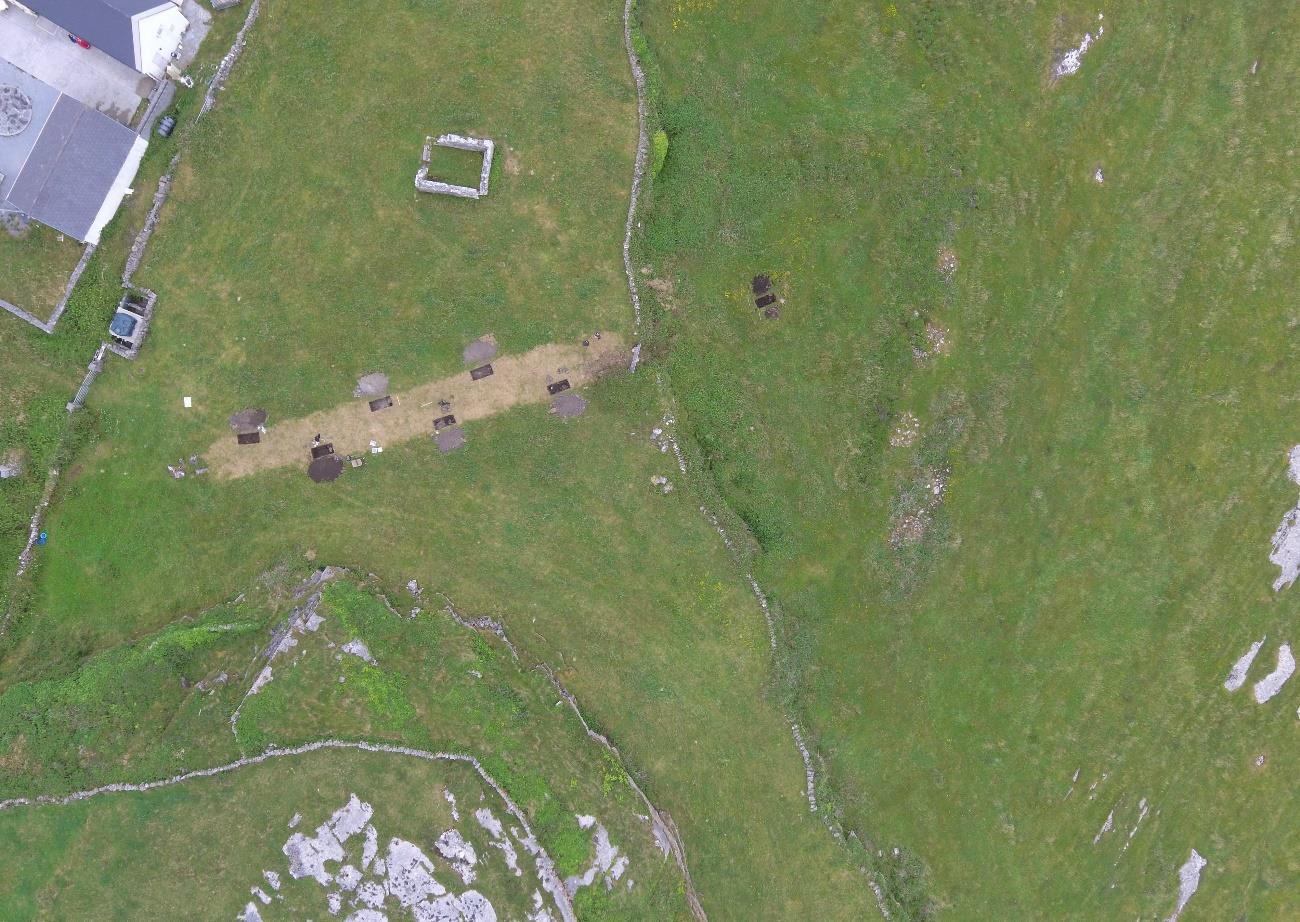
An archaeological test excavation was undertaken to facilitate the upgrade of an existing flood relief pipe adjacent to Teampall Na Naomh (GA110-073001-), within an ecclesiastical enclosure (GA110-073002-). The excavation comprised the hand excavation of seven test trenches (2m x 1m). Archaeological deposits or features were discovered in four of the seven trenches. Animal bone and shell were found in all seven trenches; post-medieval pottery, clay pipe fragments and occasional corroded metal objects were found in several, and metalworking slag and technical ceramics associated with metalworking were found in one trench.
In Trench 1, the south-westernmost trench, a ditch crossed the trench on an approximate north to south alignment. It was filled by material indistinguishable from the topsoil, but a large amount of animal bone retrieved from this location and a metal object (too corroded to identify without x-ray) are likely associated with it. The ditch does not appear to align with any depicted on historical mapping. The bone included deer antler likely to have been brought to the island, perhaps during the medieval period. The ditch cut an earlier layer of soil containing bone and shell. A soil sample of this was retrieved.
In Trench 2, a small portion of the same layer found to pre-date the ditch in Trench 1 was also uncovered, suggesting that the layer extends over an area at least 8m in length.
In Trench 3, a thin charcoal-rich spread containing slag and technical ceramics (evidencing metalworking) was discovered. The technical ceramics are likely pieces of a tuyère, while the slag may be the product of ferrous or non-ferrous working (pending full specialist analysis) (Dr Paul Rondelez, pers. comm.) A soil sample of the charcoal-rich spread was retrieved.
In Trench 7, the north-easternmost trench, a large amount of stone encountered may indicate a cairn but this was inconclusive and a larger area would need to be investigated to confirm.