2026:194 - Monaghan Biogas Plant, Magernakelly, Drum, Monaghan
County: Monaghan
Site name: Monaghan Biogas Plant, Magernakelly, Drum
Sites and Monuments Record No.: N/A
Licence number: 26E0370
Author: Catriona Baldwin
Author/Organisation Address: Unit 5B, Block F, Nutgrove Office Park, Rathfarnham
Site type: Fulacht fia
Period/Dating: Bronze Age (2200 BC-801 BC)
ITM: E 659043m, N 818433m
Latitude, Longitude (decimal degrees): 54.111568, -7.097032
Archaeological testing was carried out on 29 June 2026 on the site of a proposed biogas plant in Magernakelly, Drum, Co. Monaghan. The test trenches were mechanically excavated using a 13-tonne tracked excavator fitted with a 1.8m wide toothless grading bucket under strict archaeological direction.
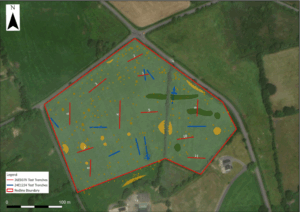
11 test trenches totalling approximately 360 linear metres were excavated across Fields 1 and 2. The purpose of the programme of archaeological testing was to verify the robustness of the geophysical results and as a result, test trenches T2 – T11 were placed in areas were no archaeological features were identified on the geophysical survey. Previously excavated Trench 6 (Licence No. 24E1224; Coen, 2024) was extended in order to reveal the full extent of the burnt mound (T1, Archaeological Area 1).
One area archaeological interest (AA1) was identified during the testing. The area, which was identified during Phase 1 of testing (Coen, 2025; Licence No. 24E1224), was further defined and its extents confirmed. It comprised a spread of burnt mound material (C3) and a possible associated trough (C5), both of which were truncated by a modern linear ditch (C4). The spread is approximately 3m (east–west) by 2.8m and was on average 0.1m deep.
With the exception of the site of the burnt spread/ fulacht fia located in the north-eastern extent of the site (AA1), no additional archaeological features or finds were identified within the proposed development area. Given the fragile nature of the fulacht fia and its very limited survival, in-situ preservation is not considered a viable option. Therefore, it is recommended that AA1 is archaeologically excavated prior to construction.